
Should I join a commune?
Keep this to read after the holidays...

Many of us face an upcoming period of intense liver-lashing and holiday socialising known as Christmas or Yuletide, and amid the cracker detritus, we often reconsider our household circumstances and relationships. Some people will also have spent part or much of the holiday alone, enjoyably - or not. Either way, we dream in the New Year of stranger things, better ways of living, and this week I shall be discussing whether you should consider joining a commune as part of your midlife crisis.
Communes nowadays aren’t necessarily what you imagine from the funky literature or drug-addled movies of the swinging sixties or seventies. Indeed, the term used now is ‘co-housing’ and these are rental or shared-ownership communities, often with a shared purpose: an eco-farm, an artists’ co-operative, or just some decent apartments with communal spaces and values.
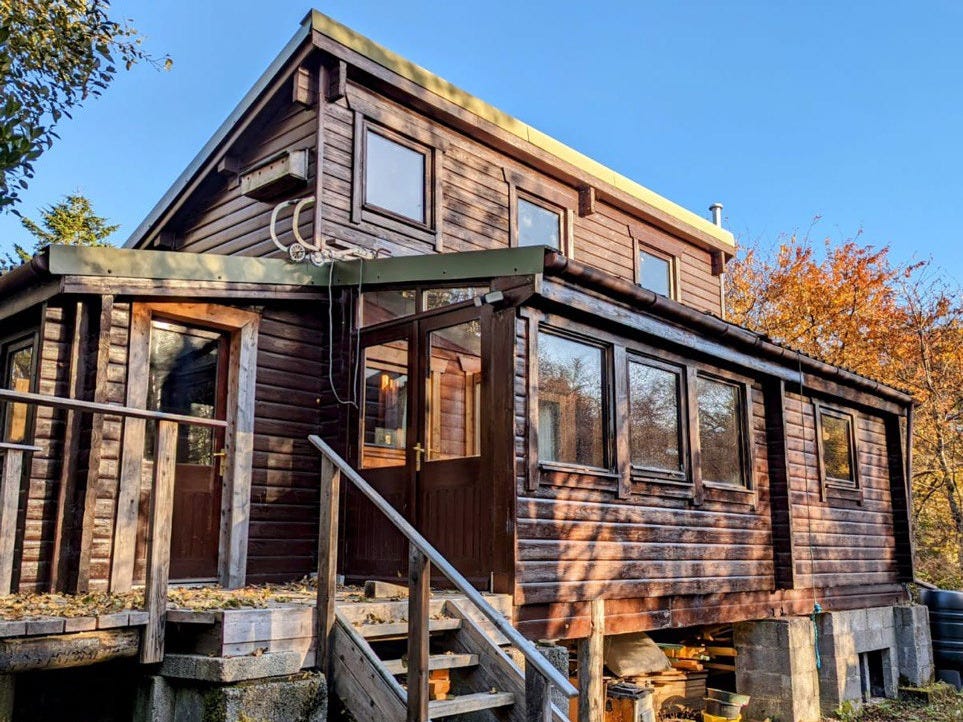
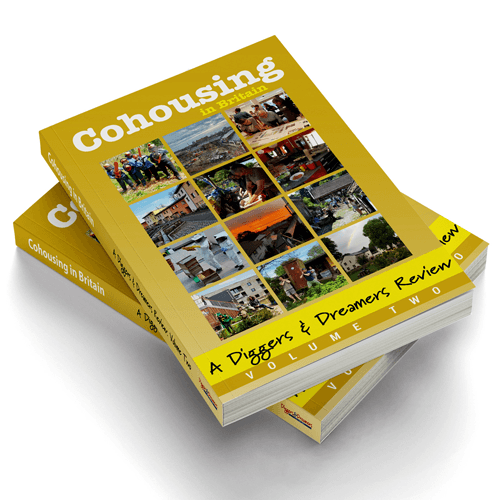
The websites are gripping. It’s not all yurts by any means. Trawl the choices at Diggers and Dreamers UK here - I just looked at Scotland, and there were urban communities in Portobello, Edinburgh; groups of cottages near Loch Lomond, and co-housing on the island of Skye (below). Obviously, there’s an application process, and you need to be on the same planet and have the same purpose as your new neighbours.
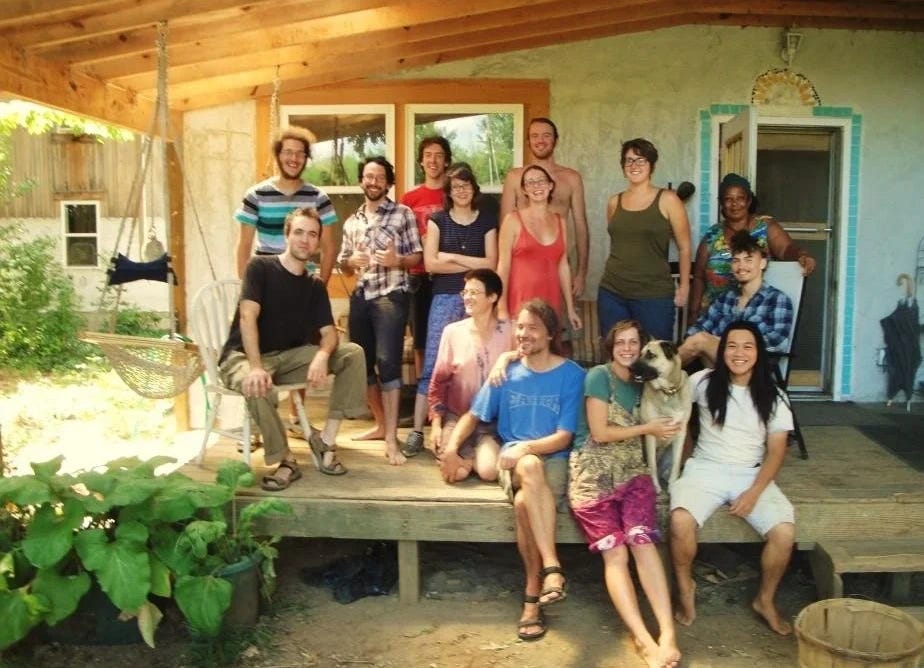
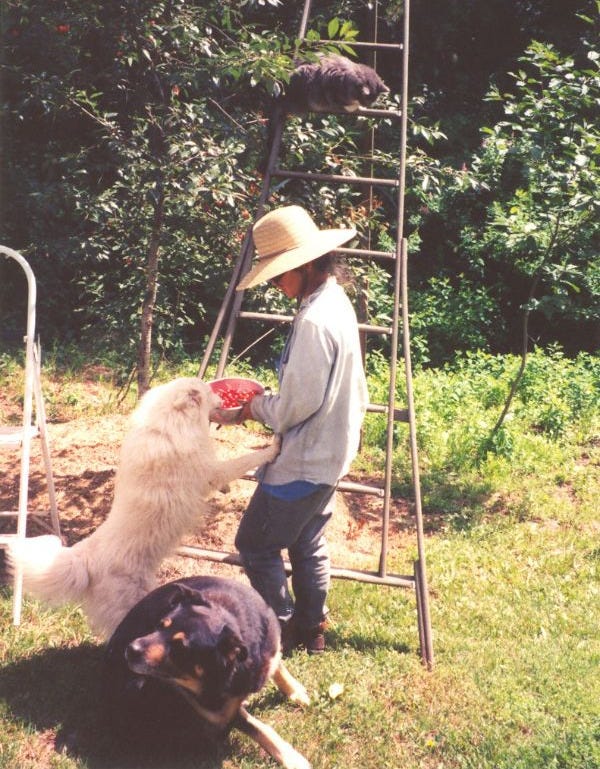
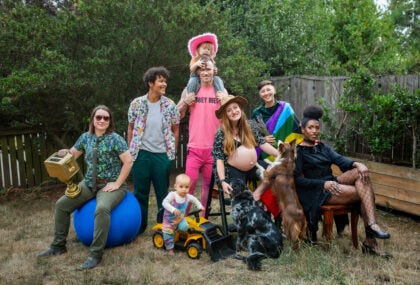
If the terms ‘retirement village’ or ‘golf community’ make you want to open a vein, this is not what this breed of communes and co-housing projects are about. Sites like Diggers and Dreamers in the UK or Foundation for Intentional Community in the USA (great group pic at the top) are hubs for a smorgasbord of curated communities. The UK photographs of the beautiful big houses around the country are enticing: Georgian rectories, ‘Strawberry Hill Gothic’ mansions, and farming co-operatives with stable blocks – oh, and The Temple Druid Community, a therapeutic centre and sustainable farm with the ethos ‘Earth care, people care, and a fair share for everyone’. Diggers and Dreamers say: ‘This is the classic idea of the commune in a big old house where everybody shares everything. There are some places like that but there are also quite a lot of places where the big house has been divided up into lots of self-contained units. And, of course, not all communes are in the country!’ The American site Foundation for Intentional Community (have a look here) has hundreds of spaces from Art Garden co-housing in Florida to rural set-ups like ‘A Gathering of our Tribe of Spiritual Healers and Light Workers’ in Washington State (below with the cat up a ladder).
As we get older, isolation grows: over three million people in England and Wales aged 65 and over live alone, more women than men, and by the age of 75 there are twice as many women living alone than men. Over 16 million over-65s live alone in the USA. Humans were not designed for this. Loneliness leaches years off your lifespan. Plus economics and the gender pension gap alone make communal living, perhaps a house-share with good friends or empathetic lodgers, look enticing. Why be alone if you can continue to contribute – and party? Becoming part of a commune or a co-housing group is a growing trend for people who have reached the half-century mark or more, and for some families and younger people too.
When marriages – heterosexual and same sex – smash in the tsunami of midlife, partners die, children move on, lovers leave, expectations change, and online dating proves profoundly irritating, many people are left living alone who just don’t like it very much. They don’t necessarily want a lover, but they want to befriend, to not be bored, to be a useful part of a creative community. The word commune is losing traction, perhaps due to seventies’ stoner connotations, and the four hundred or so groups round the UK tend to call themselves ‘intentional communities’. Many of these communards are perfectly sane, even rather conventional. What they offer is actually closer to how humans have lived for thousands of years, in small groups, sharing resources and companionship.
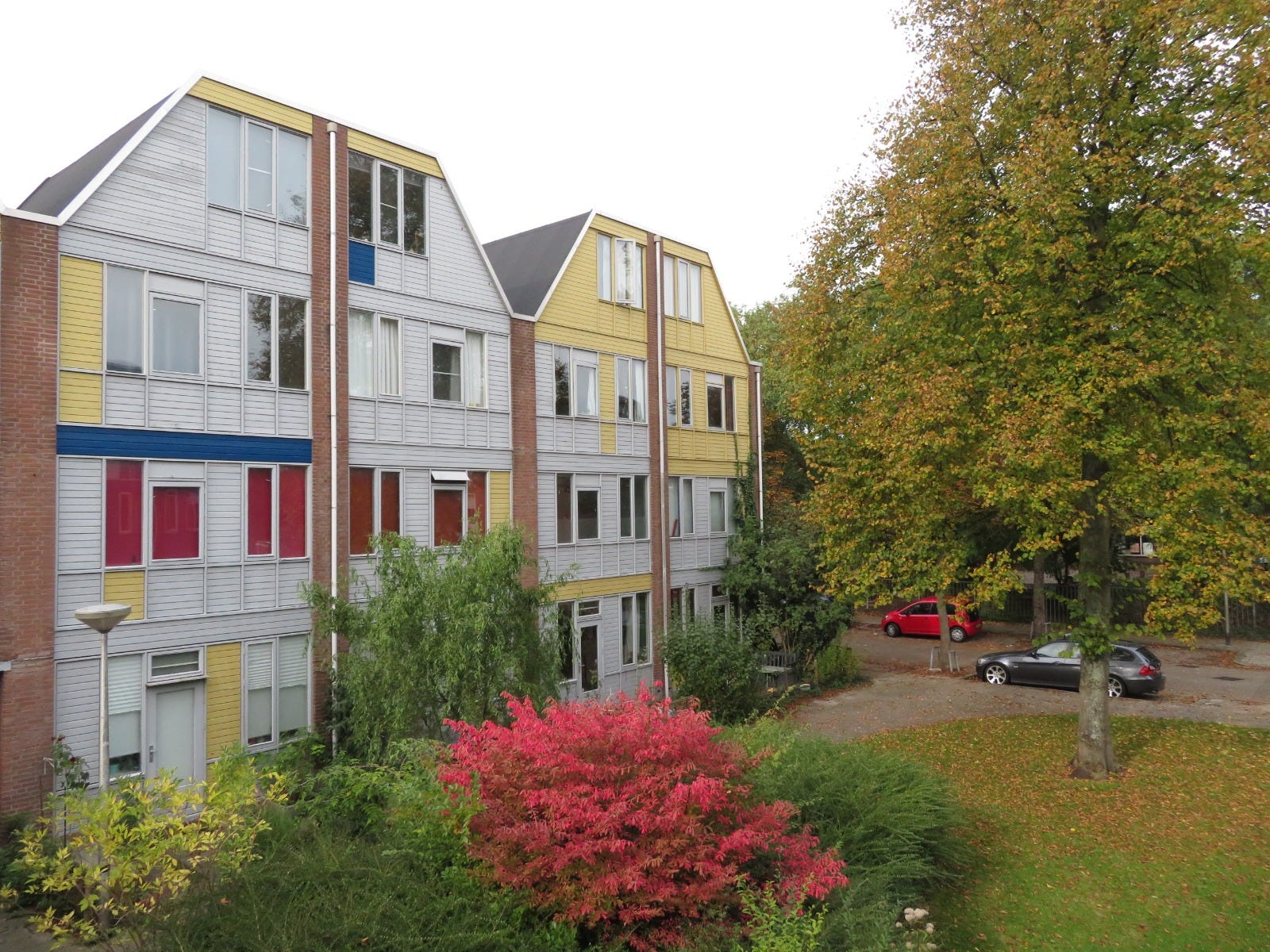
Some of the co-housing projects are multi-gender and multi-generational and include couples and families, like Centraal Wonen Delft (below) in the Netherlands, cool social housing designed for a hundred residents with large, shared kitchens which has been around since the 1980s. Others, like New Ground in North London, are women-only with a strong feminist ethos and focus on the later years: the youngest resident there is 58, the oldest, 95. Some women work, others volunteering, others writing and painting. The modern glass and brick buildings include communal eating, gardening and meeting spaces as well as private kitchens and studios, and a guest suite for overnight visitors, so brothers, friends, lovers and grandchildren can stay over – but they can’t live in.
It’s an amazing privilege to curate your own community: ‘For so long we have all been slaves to the housing market, and it’s really hard to create intentionally cohesive communities within that. People who are attracted to co-housing usually want purposeful closeness to their neighbours as a big part of their lives,’ English co-housing architect Mellis Haward told The Guardian. ‘It’s not just about alleviating loneliness – it allows people to become part of an ecosystem of families and individuals.’ Haward’s latest co-housing project is a diverse, multi-age, mixed community called Angel Yard, being eco-built in Norwich. In America, there are now Mommunes, single mothers joining forces and living together, splitting bills and childcare, sharing the pleasures of parenting. The UK Cohousing network has a website with alerts about new projects, and advice on how to begin what seems to be a complex legal, architectural, planning and negotiating process to start building your own utopian community. Developers are also creating purpose-built co-housing.
In midlife, some people want not just to shrug off conventional living, but to dump the bricks and mortar too. In Chloe Zhao’s film Nomadland, my favourite actor on earth Frances McDormand takes to the open road in her van to look for adventure and work after her husband dies and her job prospects crash in the deadend town of Empire, Nebraska. Her van is affectionately named Vanguard, and somehow McDormand’s character manages simultaneously to be defiantly alone and part of a bigger, welcoming, unquestioning community at campsites and meet-ups. The film was based on a non-fiction book by Jessica Bruder about her own experiences in her van, Halen (after the hard-rock band – see what she did there?). In the film, when McDormand is asked if she’s homeless, she demurs: ‘No, I’m not homeless. I’m just house-less. Not the same thing, right?’

In the States, three million people live in vans, often continually travelling, sometimes due to poverty and sometimes attempting a later-life On the Road Kerouacian dream. There are ‘snowbirds’ who migrate south across the States in their campervans with the weather in winter, and north in summer. Another trend over there is ‘Tiny House Communities’ where people downsize into studio-sized houses with a communal element. Jane Campion’s New Zealand television series Top of the Lake anticipated this by featuring a community of women who lived in isolation by a lake in a circle of old shipping containers, with Holly Hunter playing their feminist guru: “Everything you think you are, you’re not,’ she says. ‘What’s left? Find out.’
During the Covid years and onwards, people became digital nomads, working and living abroad, renting or swapping homes, and the travelling van trend also took off during lockdown. Having a van meant freedom and escape, and on holiday on the Scottish islands of Skye and Gigha during that strange time, I met couples and single people who had not just bought motorhomes, but done it brilliantly on the cheap, fitting out old post vans or Ford Transits with mattresses, water tanks, mini-kitchens and bookshelves, and touring the Highlands. What better activity was there in lockdown? Around Bristol, there were 150 van-dwellers before lockdown, and now there are over 600. Van living can be long term, or just seasonal, when the weather is good. What if you could just rent out your house for a while – a week, a fortnight, a month – and drive away?
Unable to personally test living in a commune or indeed taking off in a van for a year, when researching this I canvassed the opinions of my friend, writer-photographer Anita Chaudhuri, who has unexpectedly become rather an expert on co-housing after being assigned to write about three different housing projects for The Guardian. Anita and I met last century at university, when we both worked on the Glasgow University Guardian student newspaper. Anita began her commune-odyssey at New Ground. ‘When they asked me to go visit the feminist co-housing collective in Barnet, I thought it might be boring, but the minute I got there and saw the design, I thought, well, this place is incredible. A lot of love and emotional investment had gone into it. They spent twenty years bringing it to fruition and some of the women who had been the original visionaries were no longer alive by the time it finally got off the ground. I could see that these women were just a bit ahead of the path I am on, and that they were basically like slightly older versions of all my friends. But what struck me about this group of women was they were at this stage of life where they were post marriage and post family. Many of them were widows, and some even had children living nearby. But they didn’t like that sort of relationship of dependence with their family.’
She found that the residents envisioned a different way of life, and even as they grew older they wanted to keep going out. ‘One woman who’s 95 is still working as a book editor. She went through the Holocaust, an incredible woman. She regularly goes to the theatre and the hairdresser with another younger woman in the community. And they’ve been great friends for some time.’ That’s brilliant, but I imagine there are also some complexities: those who don’t pull their weight, those who are downright annoying. Diplomacy matters and rules and boundaries are probably rather important to settle upon early, especially if residents buy rather than let their flats or houses.
The interview process to join such communities is as thorough as it is mysterious, with people invited in to come and cook a meal or spend an evening. Anita reported this from the Dutch co-housing group, Centraal Wonen Delft: ‘I wouldn’t exactly describe it as an audition, although I did have to sing at my interview,’ says Marten, who moved in after a relationship broke down. ‘That was unusual, and it happened because I told the housemates that one of my hobbies was singing. Understandably, they said: “Well, let’s hear what you sound like before we say yes.”’ The communal kitchens and shared bathrooms in the Delft community housing might have been the breaking point for me. I find it hard enough to share a dishwasher with my own family. As we know, there are people who stack dishwashers like a Scandinavian architect, and there are others who stack dishwashers like a racoon on crack. I am the latter.
Of course, you don’t have to actually be friends with everyone in the community: it’s more a an intentionally interconnected village. Anita explained: ‘Community is having people around you who have this thing in common. Previously it used to be the church or whatever, so you’re not going to be best friends with everyone. You’re going to have your particular friend, and there’ll be other people you really value because they’re very knowledgeable about certain things you know about – or because you just feel they’re not your comfort zone. And I think that’s quite a valuable thing. And maybe later in life it becomes a lot more important to actually have extra bodies around to help, neighbours, so people don’t get siloed in their own little bubbles and go out less.’
I ask Anita if she fancied the communal life, after she made a final visit to Cannock Mill, an eco-village in Essex created by a feminist architect, intended to simultaneously tackle the climate crisis and loneliness in later life, among other advantages. There was a communal allotment, a fire pit, community chickens and beehives. It sounded idyllic. ‘I’m not sure it’s for me,’ she said. ‘I grew up around the Indian half of my family who live in communal households anyway. All my cousins and everyone in Calcutta are sort of cool about it, having multi-generations coming and lolling around together,’ she said. ‘It depends how much you like your individual life, your own stuff, and I can see people might not want to give up on that so easily. I can’t imagine having breakfast with this random group of people, but I could imagine sharing with extended family or friends.’
Co-housing makes massive financial sense, particularly in cities like London where renting and buying is extortionate. Why live in a one-bed flat when you can escape to the country and communally own a village? Anita was also attracted to the co-owning of community cars and domestic items. ‘I mean, why on earth does every household have to have a lawnmower to use once a month? It struck me that there’s a huge cost saving and environmental saving for the planet.’ I liked that too. Being from Glasgow, we both recalled the tradition of ‘the steamie’, the communal laundry room where women gathered gossiping at the bottom of every tenement building, next to the drying green at the back. I still remember my mum saying, ‘You’ll be the talk of the steamie!’ when I did something reprehensible.
Communal living is hardwired into our natures, and the friendships (and stories) that we can get from it are to be treasured. I love the idea that as we move into midlife we can choose the kind of communal living we might want in future: the cast, the crew, the location – whether it’s an eco-village in Essex or a van in Nebraska. It’s a liberating thought.
Here’s an added extra for paid susbscribers - a short piece about writer (and my neighbour) Deborah Moggach, who wrote the book and 2004 film The Best Exotic Marigold Hotel, the first mature commune movie. She tells about her early wild days in communal arty Hampstead:
